

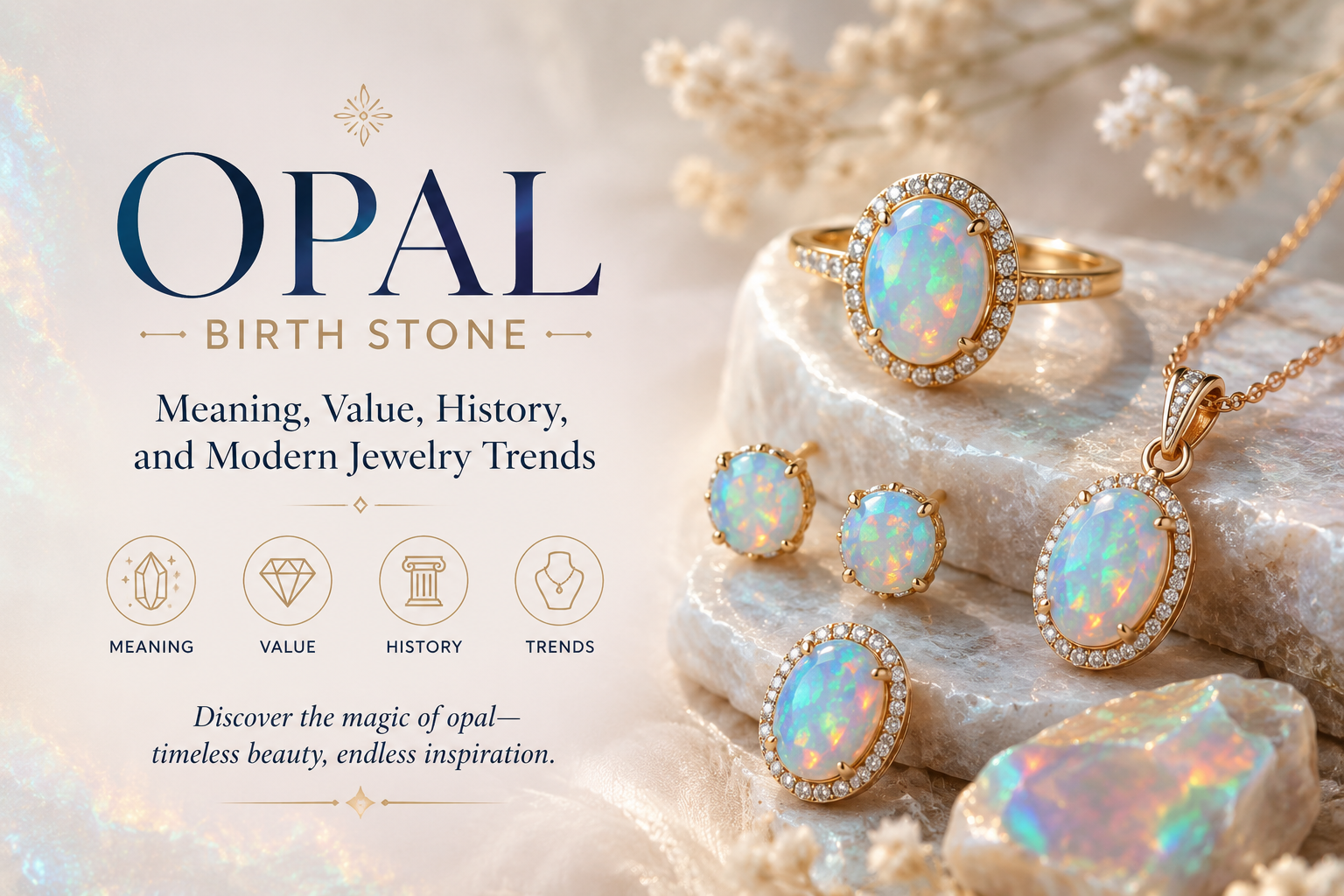
The opal birth stone has fascinated gemstone lovers for centuries because of its shifting rainbow colors and rare optical beauty. Associated with October birthdays, opal is considered one of the most unique gemstones in the jewelry market. Unlike diamonds or sapphires that display a single dominant shade, opals can reveal flashes of blue, red, green, orange, and violet within a single stone.
Modern buyers are drawn to opal jewelry not only for its visual appeal but also for its symbolism. The gemstone is linked with creativity, emotional balance, optimism, and individuality. From luxury necklaces to minimalist rings, opal continues to influence fashion trends worldwide.
According to gem industry reports, Australia supplies the majority of the world’s precious opals, while Ethiopia and Mexico are also major sources. Jewelry designers value opal for its ability to create one-of-a-kind pieces because no two stones display the same color pattern.
This comprehensive guide explains the history, formation, types, value, symbolism, and care methods of opal gemstones while exploring why they remain highly desirable in today’s global jewelry market.
What Is Opal?
Opal is a hydrated form of silica that contains water trapped within its structure. Unlike many gemstones with a crystalline structure, opal forms through microscopic silica spheres arranged in patterns that scatter light. This process creates the famous “play-of-color” effect that makes opals instantly recognizable.
On the Mohs hardness scale, opals usually rank between 5 and 6.5, meaning they are softer than diamonds, rubies, and sapphires. Because of this, they require careful handling and proper jewelry settings.
Gemologists classify opals into two main categories:
- Precious Opal: Displays strong play-of-color.
- Common Opal: Lacks the rainbow-like color flashes.
The gemstone is available in many shades and patterns, making it popular among collectors and jewelry enthusiasts.
The History Behind Opal Gemstones
The history of opal stretches back thousands of years. Ancient Romans admired opals as symbols of hope and purity. Roman writer Pliny the Elder described opal as a gemstone that combined the beauty of multiple gems into one.
In medieval Europe, opals were believed to bring good luck and protection. Some cultures considered them magical because their shifting colors resembled lightning or fire trapped inside stone.
During the 19th century, Australian opal deposits transformed the gemstone market. Large discoveries in regions such as Coober Pedy and Lightning Ridge made Australia the world’s leading opal producer.
Today, opals remain highly valued in both traditional and contemporary jewelry collections.
Why October Is Linked to Opal
The opal birth stone is officially associated with October birthdays. Jewelers and astrologers often connect opal with emotional clarity, inspiration, and confidence.
Historically, October birthstones represented warmth and protection during seasonal transitions. Opal became the preferred gemstone because of its colorful appearance and symbolic meaning.
Many people choose opal jewelry as personalized gifts for birthdays, anniversaries, and milestone celebrations. The gemstone is also commonly associated with the 14th wedding anniversary.
Because opal appears in many color variations, it appeals to buyers seeking jewelry that feels distinctive and personal.
Types of Opals Found Around the World
1. Black Opal
Black opal is considered the rarest and most valuable variety. It usually features vibrant color flashes against a dark background, creating dramatic contrast. Most high-quality black opals originate from Lightning Ridge in Australia.
2. White Opal
White opal has a milky or pale body tone with softer color flashes. It is widely used in rings, earrings, and pendants because of its elegant appearance.
3. Fire Opal
Fire opals are known for their orange, yellow, or reddish body colors. Many fire opals come from Mexico and are often transparent or translucent.
4. Boulder Opal
Boulder opal forms naturally within ironstone rock. These stones are admired for their natural patterns and earthy textures.
5. Ethiopian Opal
Ethiopian opals have become increasingly popular in global jewelry markets because of their intense colors and relatively affordable pricing.
How Opals Are Formed
Opals form when silica-rich water enters cracks in rocks and underground cavities. Over thousands or even millions of years, water evaporates and leaves silica deposits behind.
The gemstone’s play-of-color occurs because tiny silica spheres diffract light. The size and arrangement of these spheres determine the colors visible within the stone.
This natural process makes every opal visually unique. Even stones from the same mine can display completely different color patterns.
Major opal-producing countries include:
- Australia
- Ethiopia
- Mexico
- Brazil
- Honduras
- United States
Australia remains the dominant source of high-quality precious opals and contributes significantly to global supply.
Opal Value and Market Pricing
Opal prices vary widely depending on quality, origin, brightness, color pattern, transparency, and rarity.
Factors That Influence Opal Pricing
Color Brightness
Bright red and orange flashes are generally the most valuable because they are rarer than green or blue tones.
Body Tone
Dark body tones, especially in black opals, increase visual contrast and market value.
Pattern Quality
Distinct patterns such as harlequin, floral, and ribbon designs can significantly raise prices.
Origin
Australian black opals are among the highest-priced gemstones in the opal market.
Size and Clarity
Larger stones with strong color distribution and minimal inclusions command premium prices.
Average Market Prices
- Commercial white opals: $20–$150 per carat
- Ethiopian opals: $50–$300 per carat
- Australian black opals: $500–$10,000+ per carat
- Rare collector-grade opals: Tens of thousands of dollars
Luxury jewelry brands continue to increase demand for premium opals because consumers prefer colorful gemstones with distinctive identities.
Opal Jewelry Trends in 2026
The global jewelry industry has experienced rising demand for colored gemstones over the past several years. Opals have become especially popular among younger buyers seeking unique alternatives to traditional diamond jewelry.
Minimalist Opal Rings
Thin gold bands featuring small opals are trending in modern jewelry collections. Buyers appreciate their elegant and artistic appearance.
Vintage-Inspired Designs
Victorian and Art Deco styles featuring opals are making a strong comeback in luxury fashion.
Ethical and Sustainable Jewelry
Consumers increasingly prefer responsibly sourced gemstones. Australian and Ethiopian opal suppliers now emphasize ethical mining practices and transparent sourcing.
Personalized Birthstone Jewelry
Customized necklaces and rings featuring birthstones remain highly popular in online jewelry markets.
Social media platforms and celebrity fashion trends have also contributed to increased interest in opal jewelry worldwide.
Symbolism and Spiritual Meaning
Throughout history, opals have been linked with creativity, intuition, and emotional healing. Some traditions believed the gemstone could strengthen imagination and inspire confidence.
Common symbolic meanings associated with opals include:
- Hope and positivity
- Emotional balance
- Creativity and inspiration
- Passion and individuality
- Love and loyalty
Many people wear opal jewelry as a reminder of self-expression and personal growth.
Although spiritual interpretations vary between cultures, opal consistently represents transformation and uniqueness.
How to Identify Real Opals
Because synthetic and imitation opals exist in the market, buyers should understand how to recognize genuine stones.
Signs of Authentic Opal
Natural Color Movement
Real opals display shifting colors when viewed from different angles.
Irregular Patterns
Natural opals usually have random, uneven color patterns instead of perfectly repeated designs.
Surface Texture
Authentic stones may show slight imperfections under magnification.
Certification
Reputable jewelers often provide gemstone certification from recognized laboratories.
Buyers should purchase opals from trusted retailers to avoid low-quality imitations.
Related Reading
If you enjoy learning about zodiac gemstones and birthstones, you may also like:
Caring for Opal Jewelry
The opal birth stone requires more care than harder gemstones because of its moderate hardness and water content.
Essential Care Tips
- Avoid dropping or striking the stone.
- Keep opals away from harsh chemicals.
- Store jewelry separately from harder gemstones.
- Clean with a soft cloth and mild soap.
- Avoid prolonged exposure to extreme heat.
Because opals can lose moisture over time, proper storage helps preserve their appearance and durability.
Protective settings such as bezel designs are often recommended for rings and bracelets.
Opals in Luxury Fashion and Celebrity Culture
Luxury fashion houses frequently incorporate opals into modern collections because of their artistic visual appeal.
Celebrities often wear opal earrings, pendants, and cocktail rings during red carpet events. Designers appreciate how opals interact with lighting, photography, and metallic settings.
The gemstone’s ability to complement both gold and silver jewelry makes it versatile for fashion styling.
High-end jewelers continue to release exclusive opal collections aimed at buyers seeking rare and colorful gemstones.
Investment Potential of Opals
Collectors increasingly view premium opals as alternative investment assets. Rare black opals and exceptional patterned stones have shown strong demand among gemstone investors.
Several factors contribute to long-term investment potential:
- Limited supply of premium Australian opals
- Growing international demand
- Increased popularity of colored gemstones
- Unique patterns that cannot be duplicated naturally
However, gemstone investment requires expert evaluation and proper certification.
Collectors should focus on quality, origin, brightness, and rarity when purchasing investment-grade opals.
Common Myths About Opals
Myth 1: Opals Bring Bad Luck
This superstition became popular during the 19th century because of fictional literature. Historically, many cultures actually considered opals symbols of good fortune.
Myth 2: Opals Are Too Fragile for Jewelry
While softer than diamonds, opals can last for generations when handled correctly.
Myth 3: All Opals Look the Same
Every opal displays unique colors and patterns, making each gemstone visually distinct.
Understanding these myths helps buyers appreciate opals more confidently.
Why Buyers Continue to Love Opals
The opal birth stone remains one of the world’s most captivating gemstones because it combines rarity, individuality, symbolism, and artistic beauty.
Unlike gemstones with predictable appearances, opals constantly shift in color depending on light and viewing angle. This natural uniqueness appeals to modern buyers who value originality and personal expression.
Whether featured in minimalist rings, vintage necklaces, or luxury collector pieces, opals continue to hold strong emotional and commercial value in the global jewelry industry.
As demand for colorful gemstones grows, opals are expected to remain an important trend in both fine jewelry and fashion markets for years to come.
Conclusion
The opal birth stone stands out as one of the most fascinating and visually dynamic gemstones available today. Its rich history, symbolic meaning, colorful appearance, and increasing market demand make it a favorite choice for jewelry lovers around the world.
From Australian black opals to vibrant Ethiopian varieties, every stone tells a different story through its unique play-of-color. Whether you are purchasing opal jewelry for fashion, personal symbolism, or investment purposes, understanding quality, care, and authenticity is essential.
As modern consumers continue seeking distinctive gemstones with emotional significance, opals are likely to remain timeless symbols of creativity, elegance, and individuality.
