

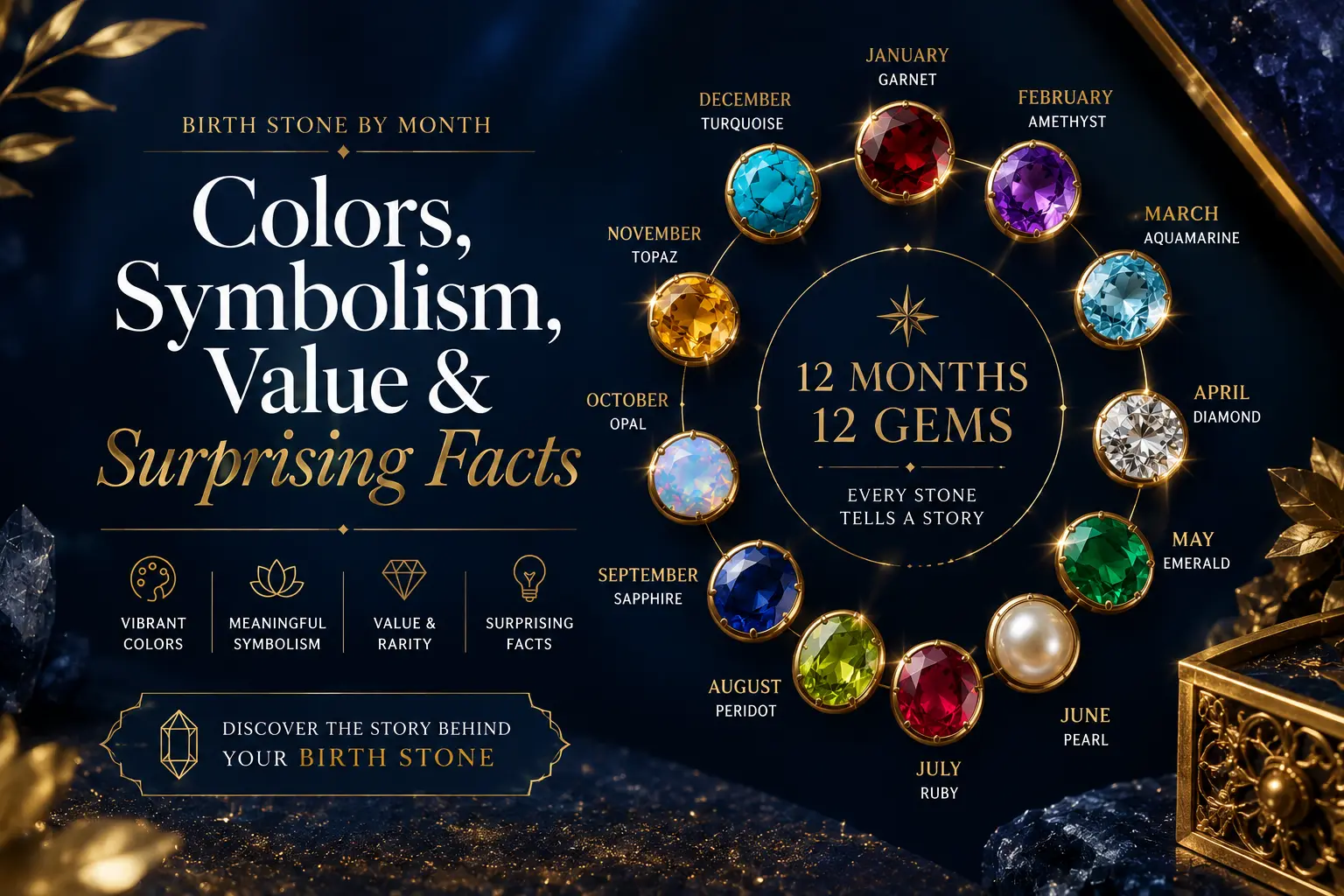
A Birth Stone by Month is a gemstone traditionally associated with a person’s birth month. Each of the twelve months has its own birth stone, believed to symbolize unique qualities, personality traits, and historical meanings. These gemstones have been valued for centuries across different cultures and are commonly worn as jewelry or given as meaningful gifts to celebrate birthdays and special occasions.
The modern birth stone system includes gemstones such as Garnet for January, Amethyst for February, Aquamarine for March, Diamond for April, Emerald for May, Pearl and Alexandrite for June, Ruby for July, Peridot for August, Sapphire for September, Opal and Tourmaline for October, Topaz and Citrine for November, and Tanzanite, Turquoise, and Zircon for December. Each stone is known for its distinctive color, rarity, symbolism, and cultural significance.
People choose birth stones not only for their beauty but also for their symbolic meaning. For example, Garnet is often associated with protection and strength, Amethyst with wisdom and clarity, Emerald with growth and renewal, and Sapphire with loyalty and truth. While these meanings are based on tradition rather than science, they continue to make birth stones popular in jewelry, gifts, and personal collections.
In this complete Birth Stone by Month guide, you’ll learn the official gemstone for each month, its meaning, history, colors, symbolism, and fascinating facts. Whether you’re looking for your own birth stone, researching gemstone meanings, or shopping for a personalized gift, this guide provides everything you need to know about the world’s most popular monthly gemstones.
What Is a Birthstone?
A birthstone is a gemstone associated with a person’s birth month. The tradition dates back thousands of years and is often linked to religious texts, ancient civilizations, and cultural beliefs.
Modern birthstone lists were standardized in 1912 by the American National Retail Jewelers Association, now known as the Jewelers of America.
People often wear birthstones because they symbolize:
- Good fortune
- Protection
- Personal identity
- Love and friendship
- Spiritual significance
The popularity of the birth stone by month tradition continues to grow worldwide.
Complete Birthstone Chart
| Month | Birthstone |
| January | Garnet |
| February | Amethyst |
| March | Aquamarine |
| April | Diamond |
| May | Emerald |
| June | Pearl, Alexandrite, Moonstone |
| July | Ruby |
| August | Peridot, Spinel, Sardonyx |
| September | Sapphire |
| October | Opal, Tourmaline |
| November | Topaz, Citrine |
| December | Turquoise, Tanzanite, Zircon |
Let’s explore each month in detail.
January Birthstone: Garnet
Meaning and Symbolism
Garnet symbolizes:
- Protection
- Friendship
- Loyalty
- Strength
Ancient travelers often carried garnets as protective talismans during long journeys.
Color
Although commonly red, garnets also occur in:
- Green
- Orange
- Yellow
- Purple
Value
Commercial garnets can cost as little as $20 per carat, while rare green tsavorite garnets may exceed several thousand dollars per carat.
February Birthstone: Amethyst
Meaning and Symbolism
Amethyst is associated with:
- Wisdom
- Peace
- Clarity
- Spiritual growth
Ancient Greeks believed amethyst protected against intoxication.
Color
Amethyst ranges from light lavender to deep purple.
Value
Most amethysts are affordable, typically ranging from $20 to $200 per carat depending on quality.
March Birthstone: Aquamarine
Meaning and Symbolism
Aquamarine represents:
- Serenity
- Courage
- Harmony
- Communication
Its name originates from the Latin phrase meaning “water of the sea.”
Color
The gemstone displays stunning shades of blue and blue-green.
Value
Fine aquamarines commonly range from $200 to $1,500 per carat.
April Birthstone: Diamond
Meaning and Symbolism
Diamonds symbolize:
- Eternal love
- Strength
- Purity
- Success
They remain the most recognized gemstone globally.
Hardness
Diamond ranks 10 on the Mohs scale, making it the hardest natural substance on Earth.
Value
Diamond prices vary significantly based on:
- Carat weight
- Color
- Clarity
- Cut quality
High-quality diamonds may sell for thousands or even millions of dollars.
May Birthstone: Emerald
Meaning and Symbolism
Emerald symbolizes:
- Renewal
- Wisdom
- Prosperity
- Growth
Historically, emeralds were treasured by royalty and aristocrats.
Color
Emeralds are famous for their rich green color produced by chromium and vanadium.
Value
Premium Colombian emeralds can exceed $50,000 per carat.
June Birthstones: Pearl, Alexandrite, and Moonstone
June is unique because it has multiple recognized birthstones.
Pearl
Pearls symbolize:
- Purity
- Innocence
- Wisdom
Unlike most gemstones, pearls are organic materials formed within mollusks.
Alexandrite
Alexandrite is famous for its remarkable color-changing effect:
- Green in daylight
- Red under incandescent light
This rare gemstone is among the most valuable birthstones.
Moonstone
Moonstone is admired for its glowing optical phenomenon known as adularescence.
July Birthstone: Ruby
Meaning and Symbolism
Ruby represents:
- Passion
- Courage
- Love
- Vitality
For centuries, rubies were considered the gemstone of kings.
Color
The finest rubies display vivid “Pigeon’s Blood Red” coloration.
Value
Exceptional Burmese rubies have sold for over $1 million per carat.
August Birthstones: Peridot, Spinel, and Sardonyx
Peridot
Peridot symbolizes:
- Positivity
- Prosperity
- Protection
Its vibrant green color comes from iron within the crystal structure.
Spinel
Spinel was historically mistaken for ruby due to its similar appearance.
Today, it is valued as a gemstone in its own right.
Sardonyx
Sardonyx has been used in jewelry and carvings since ancient Roman times.
September Birthstone: Sapphire
Meaning and Symbolism
Sapphire symbolizes:
- Wisdom
- Loyalty
- Integrity
- Truth
Colors
While blue is most famous, sapphires also occur in:
- Pink
- Yellow
- Green
- Purple
Value
Rare Kashmir sapphires are among the most valuable gemstones worldwide.
The enduring popularity of sapphire contributes significantly to the appeal of the birth stone by month tradition.
October Birthstones: Opal and Tourmaline
Opal
Opal is celebrated for its unique play-of-color effect.
No two opals display exactly the same color pattern.
Symbolism
- Creativity
- Hope
- Inspiration
Tourmaline
Tourmaline occurs in more colors than almost any other gemstone.
Popular varieties include:
- Pink tourmaline
- Green tourmaline
- Watermelon tourmaline
November Birthstones: Topaz and Citrine
Topaz
Topaz symbolizes:
- Strength
- Confidence
- Success
Blue topaz remains one of the most popular jewelry gemstones today.
Citrine
Known for its warm golden tones, citrine represents:
- Happiness
- Energy
- Prosperity
Most commercial citrine is affordable and widely available.
December Birthstones: Turquoise, Tanzanite, and Zircon
Turquoise
Turquoise has been treasured for thousands of years.
Ancient civilizations across Egypt, Persia, and the Americas valued this distinctive blue gemstone.
Tanzanite
Discovered in 1967 in Tanzania, tanzanite is found in only one location on Earth.
Its rarity makes it highly desirable.
Zircon
Natural zircon should not be confused with cubic zirconia.
It is a genuine gemstone known for exceptional brilliance.
The History Behind Birthstones
The origins of birthstones are often traced to the biblical Breastplate of Aaron, described in the Book of Exodus.
The breastplate contained twelve gemstones representing the twelve tribes of Israel.
Over centuries, these stones became associated with:
- Zodiac signs
- Calendar months
- Religious traditions
Modern birthstone assignments evolved gradually through cultural adaptation and jewelry industry standardization.
Why Birthstones Remain Popular Today
Several factors explain the enduring appeal of birthstones.
Personal Meaning
Birthstones create emotional connections through their association with birthdays and identity.
Gift-Giving Tradition
Birthstone jewelry remains one of the most popular birthday gifts worldwide.
Variety
The birth stone by month system offers options for every style, budget, and personal preference.
Investment Potential
Certain gemstones, including ruby, sapphire, emerald, and alexandrite, can appreciate significantly over time.
How to Choose the Best Birthstone Jewelry
When purchasing birthstone jewelry, consider:
Quality
Evaluate:
- Color
- Clarity
- Cut
- Carat weight
Certification
For valuable gemstones, request certification from respected laboratories.
Metal Choice
Popular settings include:
- Gold
- Platinum
- Sterling silver
Lifestyle
Durability matters, especially for rings worn daily.
Diamonds and sapphires generally perform best under frequent wear.
Birthstone Market Trends
The global colored gemstone market continues to expand due to:
- Rising luxury spending
- Increased online jewelry sales
- Greater interest in personalized gifts
- Growing demand for ethical sourcing
Industry experts predict continued growth in birthstone jewelry purchases over the coming years.
As consumers seek more meaningful products, the birth stone by month concept remains highly relevant in modern jewelry markets.
Fun Facts About Birthstones
- Diamond is the hardest natural material on Earth.
- Alexandrite can change color dramatically under different lighting conditions.
- Emeralds were highly prized by Cleopatra.
- Rubies often command higher prices than many diamonds.
- Pearls are the only birthstones created by living organisms.
Conclusion
The tradition of selecting a birth stone by month combines history, symbolism, beauty, and personal meaning. From January’s garnet to December’s tanzanite, each gemstone tells a unique story and reflects centuries of cultural heritage.
Whether you’re purchasing jewelry, celebrating a birthday, or simply exploring gemstones, birthstones provide a fascinating connection between nature, tradition, and personal identity. With a wide variety of colors, meanings, and price points available, there is a birthstone to suit every style and budget.
Related Reading
If you enjoy learning about zodiac gemstones and birthstones, you may also like:
