

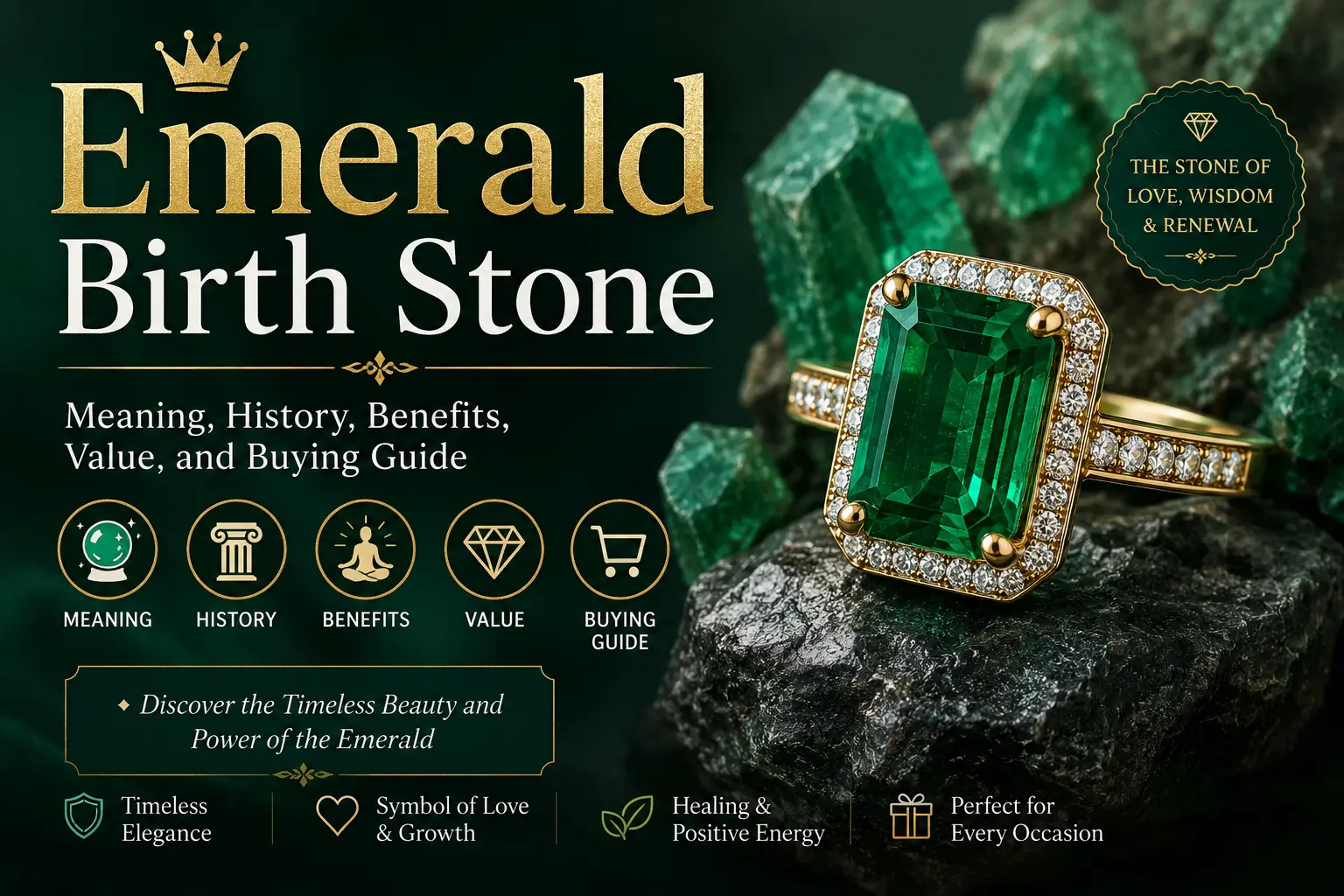
For centuries, emeralds have captivated royalty, collectors, and gemstone enthusiasts with their rich green color and remarkable symbolism. Known as the birthstone for May, emeralds represent renewal, growth, wisdom, and prosperity. Their vibrant appearance and fascinating history make them one of the most sought-after gemstones in the world.
Whether you are considering an emerald for a piece of jewelry, a meaningful gift, or an investment, understanding its origin, value, and characteristics can help you make an informed decision.
This comprehensive guide explores everything you need to know about the emerald birth stone, from its historical significance and geological formation to quality factors and purchasing considerations.
What Is the Emerald Birth Stone?
The emerald is a precious gemstone belonging to the beryl mineral family. Its distinctive green color comes primarily from trace amounts of chromium and vanadium. The gemstone ranks between 7.5 and 8 on the Mohs hardness scale, making it durable enough for everyday jewelry when properly cared for.
As the official birthstone for May, emerald symbolizes rebirth, hope, and new beginnings. Throughout history, many cultures believed the gemstone possessed healing powers and the ability to enhance intelligence, intuition, and emotional balance.
Quick Facts About Emeralds
| Feature | Details |
| Mineral Family | Beryl |
| Color | Green to Bluish-Green |
| Hardness | 7.5–8 Mohs |
| Birth Month | May |
| Symbolism | Wisdom, Prosperity, Love |
| Major Sources | Colombia, Zambia, Brazil, Ethiopia |
| Crystal System | Hexagonal |
| Refractive Index | 1.577–1.583 |
The History of Emeralds Through the Ages
Emeralds have a rich history spanning thousands of years. Archaeological evidence suggests emerald mining dates back more than 4,000 years.
Ancient Egypt
One of the earliest known admirers of emeralds was Cleopatra, the famous Egyptian queen. Historical records indicate she was deeply fascinated by emerald gemstones and often wore them as symbols of power and prestige.
Ancient Egyptians associated emeralds with fertility, eternal youth, and protection.
Roman Civilization
The Romans valued emeralds for their beauty and believed they could soothe tired eyes. Roman scholar Pliny the Elder famously wrote about emeralds and their calming green color.
Medieval Europe
During the Middle Ages, emeralds were considered symbols of divine wisdom and truth. Many believed the gemstone could reveal honesty and protect against deception.
Modern Era
Today, emeralds remain among the world’s “Big Four” precious gemstones alongside diamonds, rubies, and sapphires. They are treasured in luxury jewelry collections and continue to command significant market value.
Why Emerald Is the Birthstone for May
May is associated with spring, renewal, and flourishing growth in many parts of the world. The vibrant green color of emerald perfectly reflects these themes.
The connection between May and emerald emerged through ancient traditions linking gemstones to specific months. Over time, jewelers and gemological organizations formally recognized emerald as May’s official birthstone.
People born in May often receive emerald jewelry to celebrate:
- Growth and renewal
- Success and prosperity
- Emotional balance
- Wisdom and insight
- Love and loyalty
These qualities contribute to the enduring popularity of the emerald birth stone among gift buyers and jewelry enthusiasts.
Symbolism and Meaning of Emerald
Throughout history, emeralds have been associated with numerous positive qualities.
Wisdom and Intelligence
Many ancient cultures believed emeralds enhanced intellectual abilities and sharpened memory.
Love and Loyalty
Emeralds have long been connected to faithful relationships and lasting partnerships. Some traditions viewed them as gemstones that strengthen emotional bonds.
Prosperity and Success
The gemstone’s rich green hue is often linked to abundance, wealth, and financial growth.
Healing and Renewal
Historically, emeralds were thought to support emotional healing and personal transformation.
Although these symbolic meanings are rooted in cultural traditions rather than scientific evidence, they continue to influence the gemstone’s popularity today.
Where Emeralds Are Found
Emeralds are mined in several countries around the world, each producing stones with distinct characteristics.
Colombia
Colombia is widely regarded as the premier source of high-quality emeralds. Colombian emeralds are famous for their vivid green color and exceptional transparency.
Notable mining regions include:
- Muzo
- Chivor
- Coscuez
Zambia
Zambian emeralds often display deeper green tones with slight bluish undertones. They are highly valued for their clarity and durability.
Brazil
Brazil produces emeralds across various quality grades and is one of the world’s largest gemstone suppliers.
Ethiopia
Ethiopian emerald deposits discovered in recent decades have significantly expanded global supply and introduced beautiful stones with unique characteristics.
Understanding Emerald Quality
Like diamonds, emeralds are evaluated using specific quality factors.
1. Color
Color is the most important factor affecting emerald value.
The finest emeralds exhibit:
- Rich green saturation
- Even color distribution
- High vibrancy
- Minimal gray or yellow tones
Highly saturated green emeralds command premium prices.
2. Clarity
Most emeralds naturally contain inclusions, often called “jardin,” which means “garden” in French.
However, excessive inclusions can reduce value and durability.
3. Cut
A well-cut emerald maximizes brilliance while preserving weight.
The famous “emerald cut” was specifically developed to enhance the gemstone’s beauty and reduce stress on fragile corners.
4. Carat Weight
Larger emeralds are significantly rarer than smaller stones.
Prices increase exponentially as carat weight rises, especially for gems with excellent color and clarity.
Emerald Market Value and Real-World Pricing
Emerald prices vary dramatically based on quality, origin, and size.
Approximate retail price ranges:
| Quality Level | Price Per Carat |
| Commercial Grade | $50–$500 |
| Good Quality | $500–$3,000 |
| Fine Quality | $3,000–$10,000 |
| Exceptional Quality | $10,000–$100,000+ |
Some rare Colombian emeralds have sold for hundreds of thousands of dollars per carat at prestigious auctions.
Recent gemstone market reports indicate sustained demand for high-quality emeralds due to growing interest in colored gemstones and luxury jewelry.
Emerald Jewelry Options
Emeralds are versatile gemstones suitable for various jewelry styles.
Emerald Rings
The Emerald engagement rings have gained popularity among buyers seeking unique alternatives to diamonds.
Emerald Necklaces
A pendant featuring the emerald birth stone offers timeless elegance and everyday wearability.
Emerald Earrings
Studs and drop earrings showcase the gemstone’s vivid green color beautifully.
Emerald Bracelets
Emerald bracelets combine sophistication with symbolic meaning, making them excellent gifts.
How to Care for Emerald Jewelry
Proper maintenance helps preserve an emerald’s beauty for generations.
Cleaning Tips
- Use warm water and mild soap.
- Clean gently with a soft brush.
- Rinse thoroughly.
- Dry with a lint-free cloth.
Avoid
- Ultrasonic cleaners
- Steam cleaners
- Harsh chemicals
- Sudden temperature changes
Because many emeralds undergo oil treatments to improve appearance, gentle cleaning is strongly recommended.
Storage
Store emerald jewelry separately from harder gemstones to prevent scratching.
Natural vs. Lab-Grown Emeralds
Consumers today can choose between natural and laboratory-created emeralds.
Natural Emeralds
Advantages:
- Rare and unique
- Greater long-term value
- Natural geological origin
Challenges:
- Higher cost
- More inclusions
Lab-Grown Emeralds
Advantages:
- More affordable
- Excellent clarity
- Environmentally efficient production
Challenges:
- Lower resale value
- Less rarity
Both options can be beautiful choices depending on personal preferences and budget.
How to Buy an Emerald
Purchasing an emerald requires careful evaluation.
Request Certification
Always buy emeralds accompanied by reports from respected gemological laboratories.
Common certification organizations include:
- GIA (Gemological Institute of America)
- IGI (International Gemological Institute)
- AGL (American Gemological Laboratories)
Focus on Color First
Experts generally prioritize color over clarity when evaluating emeralds.
Ask About Treatments
Most emeralds receive oil enhancement. Reputable sellers should disclose all treatments.
Compare Multiple Stones
Viewing several emeralds side by side makes it easier to identify superior color and quality.
Investment Potential of Emeralds
Colored gemstones have attracted increasing investor attention in recent years.
High-quality emeralds may appreciate due to:
- Limited supply
- Growing global demand
- Increasing popularity of colored gemstones
- Rarity of large untreated stones
However, gemstone investments require specialized knowledge and should be approached with careful research.
Interesting Facts About Emeralds
- Emeralds are over 20 times rarer than colorless diamonds in high-quality grades.
- Some emerald crystals grow several feet long.
- Cleopatra famously collected emerald gemstones.
- Ancient civilizations believed emeralds could predict the future.
- The largest known emerald deposits are located in Colombia.
- Emeralds belong to the same mineral family as aquamarine.
Conclusion
The emerald remains one of the world’s most admired gemstones, celebrated for its rich green beauty, remarkable history, and powerful symbolism. From ancient Egyptian royalty to modern luxury jewelry collections, emeralds continue to represent wisdom, prosperity, love, and renewal.
Whether you’re purchasing a meaningful birthday gift, selecting a stunning piece of jewelry, or exploring gemstone investments, the emerald birth stone offers lasting value and timeless appeal. By understanding color, clarity, origin, and care requirements, buyers can confidently choose an emerald that will be cherished for generations.
Related Reading
If you enjoy learning about zodiac gemstones and birthstones, you may also like:
FAQs
What month is emerald the birthstone for?
Emerald is the official birthstone for May.
Are emeralds more valuable than diamonds?
Some rare, high-quality emeralds can be more valuable per carat than many diamonds.
What does emerald symbolize?
Emerald symbolizes wisdom, prosperity, growth, loyalty, and renewal.
Are emeralds suitable for everyday wear?
Yes, but they require careful handling and regular maintenance.
Which country produces the best emeralds?
Colombia is widely recognized for producing some of the world’s finest emeralds.
