

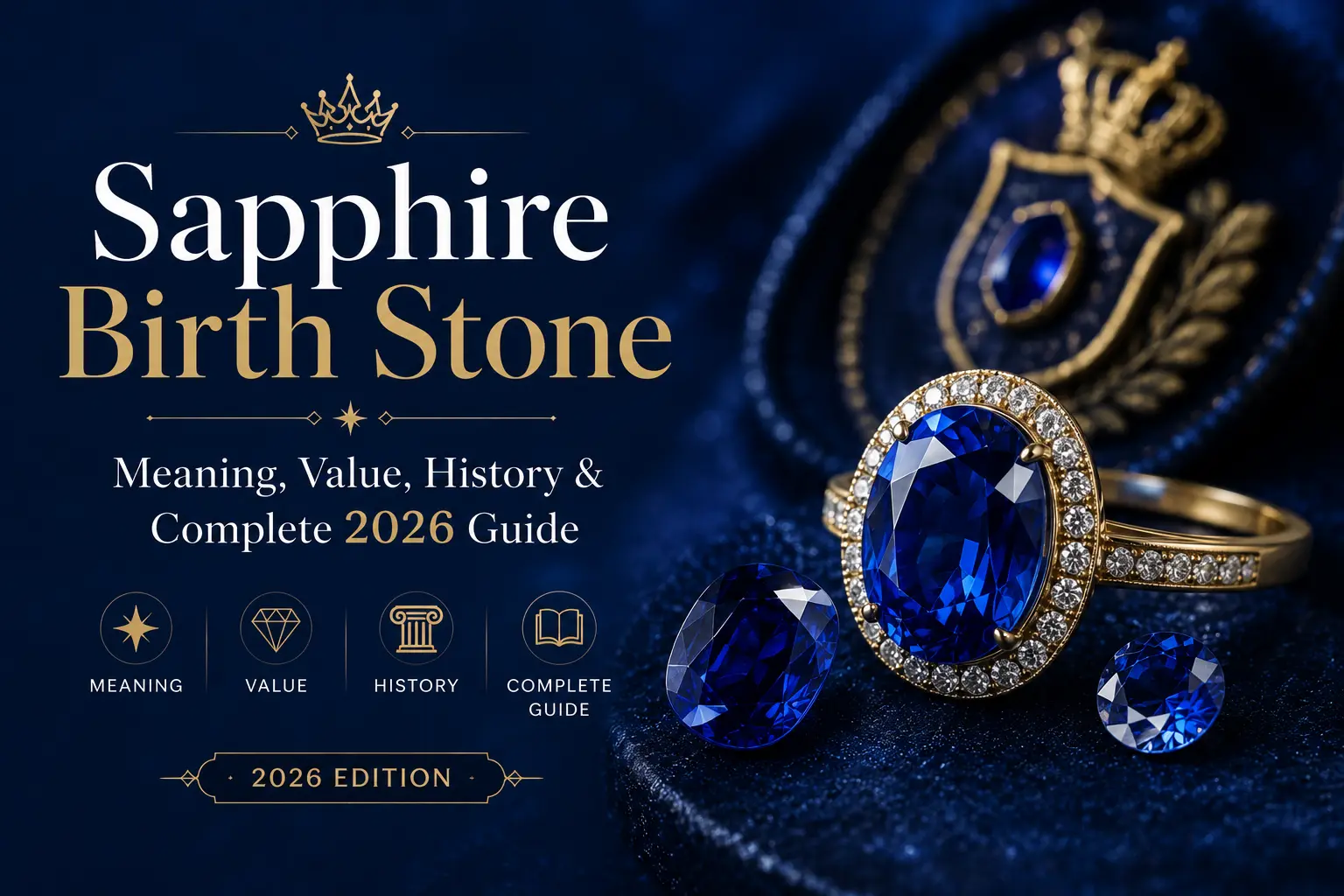
The fascination with gemstones has always been deeply tied to human culture, astrology, and beauty. Among all precious stones, sapphire stands out as one of the most admired and valuable gemstones in the world. Known for its deep blue brilliance and exceptional durability, the sapphire birth stone has been cherished for centuries by royalty, collectors, and spiritual believers alike.
Sapphire is traditionally associated with September-born individuals and symbolizes wisdom, truth, loyalty, and protection. However, its appeal goes far beyond astrology—it plays a major role in the global gemstone market and modern luxury jewelry industry.
This guide explores everything you need to know about sapphire, including its geological origins, real-world pricing data, historical significance, and how it is used in today’s jewelry and investment markets.
What is the Sapphire Birth Stone? Meaning & Symbolism
The sapphire is a variety of the mineral corundum, and it is most famous for its blue color. However, sapphires can also appear in pink, yellow, green, and even white shades.
In astrology and tradition, the sapphire birth stone is associated with:
- Wisdom and mental clarity
- Loyalty and trust in relationships
- Spiritual enlightenment and intuition
- Protection from negative energy
Historically, ancient kings and priests believed sapphires protected them from harm and envy. Even today, sapphire rings are commonly used in engagement jewelry as symbols of honesty and long-lasting commitment.
Geological Formation and Real-World Science
Sapphires are formed deep within the Earth under extreme heat and pressure. Their formation process takes millions of years, making them one of the most naturally resilient gemstones.
Basic Composition
- Mineral Family: Corundum
- Chemical Formula: Al₂O₃ (Aluminum Oxide)
- Hardness: 9 on the Mohs scale (second only to diamond)
- Crystal System: Trigonal
Major Mining Locations
- Sri Lanka (Ceylon sapphires)
- Myanmar (Burmese sapphires)
- Madagascar
- Thailand
- Australia
- Kashmir (historically the most valuable origin)
Sri Lankan sapphires are especially known for their bright cornflower blue color, while Kashmir sapphires are considered the rarest and most valuable due to their velvety blue appearance.
Sapphire Market Value: Real Pricing Data
The global sapphire market is highly dynamic and depends on color, clarity, origin, and treatment.
Average Price Per Carat (2026 estimates)
- Commercial-grade sapphire: $50 – $300 per carat
- Fine-quality sapphire: $400 – $2,000 per carat
- Premium Kashmir sapphire: $5,000 – $135,000+ per carat
Kashmir sapphires are extremely rare, with many stones coming from old mines that are no longer active. This scarcity drives their high auction prices.
For example, high-quality sapphires sold at major auction houses like Sotheby’s and Christie’s have repeatedly crossed millions of dollars per stone, especially when paired with historical jewelry pieces.
The sapphire birth stone remains one of the most stable investments in the colored gemstone market due to consistent global demand.
Historical Importance of Sapphire
Sapphire has been revered across civilizations for thousands of years.
Ancient Persia
Persians believed the sky was blue because the Earth rested on a giant sapphire.
Ancient Greece and Rome
Kings wore sapphires for protection from envy and harm. Oracles also believed sapphires helped them connect with divine wisdom.
Medieval Europe
Clergy wore sapphires as symbols of heaven and purity. The gemstone became associated with divine favor and truth.
Modern Royalty
One of the most famous sapphire jewelry pieces is Princess Diana’s engagement ring, now worn by Catherine, Princess of Wales. This increased global popularity of sapphire engagement rings significantly.
Types of Sapphire
Although blue sapphire is the most well-known, sapphires come in many varieties:
1. Blue Sapphire
The classic and most valuable type, known for its deep royal blue color.
2. Pink Sapphire
Gaining popularity in modern jewelry for its romantic tone.
3. Yellow Sapphire
Associated with prosperity and often used in Vedic astrology.
4. White Sapphire
A diamond alternative used in affordable luxury jewelry.
5. Padparadscha Sapphire
Extremely rare pink-orange sapphire, highly prized by collectors.
Each variation adds depth to the sapphire birth stone category, making it one of the most diverse gemstones in the world.
Sapphire in Modern Jewelry Industry
Sapphires play a major role in global jewelry trends. According to industry reports, colored gemstone jewelry has seen steady growth of 5–7% annually, driven by demand for unique engagement rings and personalized luxury pieces.
Sapphire is especially popular because:
- It is durable enough for daily wear
- It offers natural beauty without heavy enhancement
- It is available in multiple colors
- It carries strong symbolic meaning
Many luxury brands now offer sapphire-based collections, and custom engagement rings featuring sapphires have increased significantly over the last decade.
The sapphire birth stone is no longer just an astrological symbol—it has become a mainstream fashion statement.
Spiritual and Metaphysical Beliefs
Although not scientifically proven, sapphires are widely used in crystal healing and spiritual practices.
Common beliefs include:
- Enhancing intuition and mental clarity
- Encouraging truthfulness and honesty
- Supporting emotional balance
- Strengthening focus and discipline
- Providing spiritual protection
Blue sapphire is often associated with the throat chakra, which is believed to govern communication and self-expression.
These beliefs make sapphires especially popular among meditation practitioners and holistic wellness communities.
How to Identify a Genuine Sapphire
Due to high demand, synthetic and treated sapphires are common in the market. Here are key identification factors:
1. Color Consistency
Natural sapphires often show slight color zoning, while synthetic stones may appear too uniform.
2. Inclusions
Natural sapphires typically contain microscopic inclusions visible under magnification.
3. Certification
Always request certification from reputable gemological labs like GIA or IGI.
4. Heat Treatment
Many sapphires are heat-treated to improve color. This is common in the industry but should be disclosed.
Understanding authenticity is crucial when purchasing any sapphire birth stone jewelry.
Care and Maintenance
Sapphires are one of the hardest gemstones, but proper care still ensures long-lasting brilliance:
- Clean with warm water and mild soap
- Avoid harsh chemicals and bleach
- Use a soft brush for cleaning
- Store separately to avoid scratching other jewelry
Because of their hardness (9 Mohs), sapphires are ideal for daily-wear jewelry like rings and bracelets.
Investment Value of Sapphire
Sapphire is considered a strong long-term gemstone investment due to limited supply and increasing global demand.
Key investment insights:
- Rare origin sapphires (Kashmir, Burma) appreciate significantly over time
- Untreated stones have higher resale value
- Larger stones (>3 carats) are more valuable per carat
- Demand is growing in Asia, Europe, and the Middle East
Auction records show consistent price growth in high-quality sapphires over the last 20 years, making them one of the most stable colored gemstone investments.
Related Reading
If you enjoy learning about zodiac gemstones and birthstones, you may also like:
Frequently Asked Questions
1. What is the sapphire birth stone associated with?
It is associated with September birthdays and symbolizes wisdom, loyalty, and protection.
2. Is sapphire more valuable than diamond?
Some rare sapphires (especially Kashmir origin) can be more expensive than diamonds per carat.
3. Can sapphire be worn daily?
Yes, sapphire is extremely durable and suitable for everyday use.
4. Are all sapphires blue?
No, sapphires come in multiple colors including pink, yellow, and white.
5. Is sapphire natural or treated?
Both exist. Many sapphires are heat-treated, but untreated stones are more valuable.
Conclusion
Sapphire has remained one of the most admired gemstones throughout human history. Its combination of beauty, durability, and symbolism makes it a cornerstone of both astrology and luxury jewelry markets.
From ancient kings who wore sapphire for protection to modern couples choosing sapphire engagement rings, its significance has only grown stronger over time.
Whether you are drawn to it for spiritual reasons, fashion, or investment potential, the sapphire birth stone continues to represent wisdom, truth, and timeless elegance.
In today’s global gemstone industry, sapphire stands as a perfect balance of science, history, and emotional meaning—making it one of the most valuable and versatile gemstones in existence.
